
7 important tips to help you design the kitchen of your dreams
It is said that the kitchen is the heart of the home and there is something to it, because whether we like it or not, preparing meals is quite an important part of the life of many of us. And apparently the best social meetings take place there. Therefore, it is important that it is a place not only visually meeting our expectations, but also one where functioning is a real pleasure, not an unpleasant duty, where every centimeter is used in a thoughtful and reasonable way.
Therefore, it is worth trying an individual kitchen design that will be fully adapted to the dimensions of the room, our taste, and even such seemingly insignificant issues as growth or time resources that we have on a daily basis. Below are some important rules that will allow you to design the perfect kitchen.
1. Building height
Both the height of the lower and upper cabinets plays a fairly important role when it comes to comfortable use of the kitchen. It should not be accidental, but adapted to our height, so as not to overload the spine when bending too much, e.g. by cutting vegetables and not to bother removing the tableware or accessories from the upper part of the building. The standard height of the working surface is 85 cm and it will be suitable for people with a height of +/- 170 cm, but unfortunately, for those who are 180 cm and more, this solution will not be good anymore – then we recommend installing the tops at a height of 90 cm. As a rule, it has been assumed that the optimal height of the worktop should be determined by measuring 10-15 cm from the bend at the elbow (the forearm should be placed parallel to the floor).
Hanging cabinets are usually mounted at a distance of 55-60 cm from the worktop, but we can also make some modifications here. If you are short or the height of the room in which the furniture will be located is slightly smaller than the standard height, then the cabinets can be hung on a slightly lower ceiling. The height of the upper part of the building should be adjusted to the number of dishes and accessories that we are used to using in the kitchen. If you have several types of tableware in your collection, a whole arsenal of bowls and containers, it would be good to think about making the most of the upper space, where you can hide all the items that you don’t use very often.
2. Working triangle
This concept, mysterious to some, turns out to be the basic element of comfortable functioning in the kitchen. It is about keeping such distances between the refrigerator, sink, stove and worktop, so that we do not have to “run” when preparing meals and that the use of the kitchen is safe and does not limit the efficiency of household appliances. Basically, we separate 5 main zones
A. Stock area – here should be a refrigerator, and right next to it, at least a 40 cm section of the table top, on which we can easily put products needed for cooking or shopping.
B. Storage area – in it we put pots, cutlery or any utensils that we will use during cooking
C. Storage area – in it we put pots, cutlery or any utensils that we will use during cooking
D. The food preparation area – the stove – should be located next to the sink, but not closer than 60 cm, which affects safety (imagine the hot oil on the burner and water splashing from the tap), and the comfort of cooking, because we usually need to have “at hand” all the ingredients of the dish, which takes up a lot of space. We will appreciate placing the stove next to the sink for such mundane activities as draining pasta or potatoes, when we do not want to travel too long with a hot pot in hand.
3. Maximum use of space and the aesthetics of the room
Often, the kitchen also acts as a pantry in which we store food or preserves, so it is worth trying to include solutions that will allow you to comfortably accommodate as many products as possible in a relatively small space. Rotary systems installed in corner cabinets are a great idea, as they allow you to reach even the deepest nooks and crannies. Cargo type systems, where a set of shelves or baskets can be pulled out at the same time and can be mounted in even the narrowest spaces, will certainly be perfect for storing jars, bottles or narrow dishes. A fairly modern, but extremely useful solution also turns out to be properly profiled drawers mounted just below the dishwasher – a great place to store spare cloths, sponges or other accessories.
An interesting idea is to install a dishwashing dispenser in the counter – then we avoid putting bottles that are not very aesthetic, which in addition often leave stains on the surface of residual liquid. Staying on the topic of washing up, it’s a good idea to consider the size of the sink. If you do not plan to buy a dishwasher or you have a lot of dishes that can be damaged by mechanical washing, you will make a good decision if you decide on a large, spacious sink. A small, single-chamber sink will work great when you do not wash much by hand – then the saved space can be used for a larger worktop, which is never enough.
Fronts without handles, opened “by touch” will surely please many cooking enthusiasts who know perfectly well the situations when the hands are covered with dough and we need an additional portion of flour in the cupboard – just open them, for example elbow to avoid soiling all around. In the era of waste segregation, drawers with waste containers, which are very easy to keep in order, turn out to be an ideal option – they can be easily removed, emptied and washed.
4. High quality of materials
The kitchen is a place that is especially “featured” in almost every home. We often wipe the countertops, cut vegetables on them, move items, open cabinets, and even culinary virtuosos spill something hot or drop a heavy object, so it is extremely important that the raw materials from which the furniture is made are of the best quality, which will allow you to enjoy them for many, many years.
5. Glazed or built-up fronts? Decorated or plain?
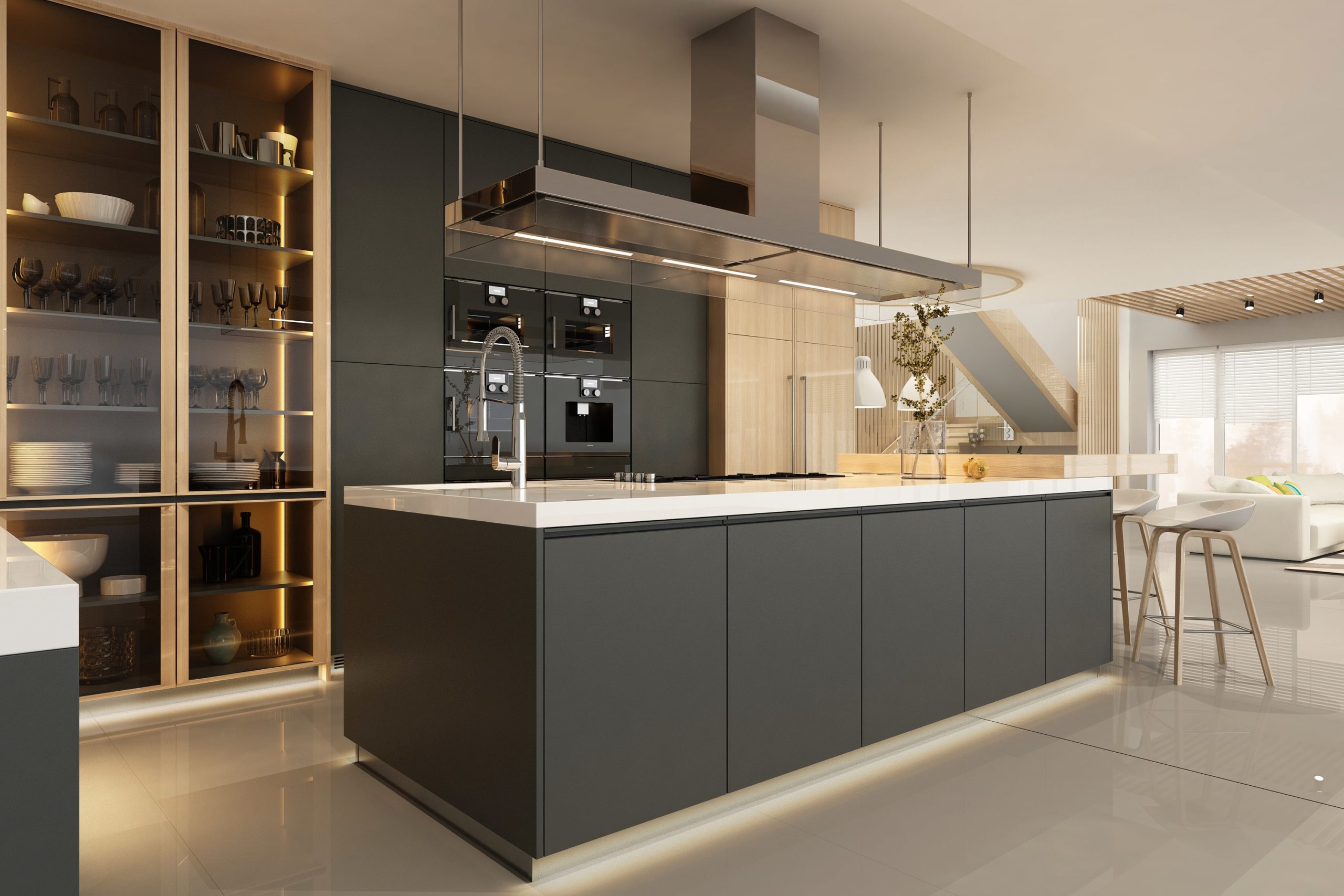
Glazed fronts are a good choice if you have a beautiful collection of cups, plates, decorated bowls and you want to display them – then they can become a great decoration of your kitchen. If, on the other hand, you have a weakness for chaos, we recommend choosing built-up fronts that will hide what we would not want to show. The style of the fronts should be adapted not only to your taste, but also to the time possibilities. Decorated surfaces with numerous details, although they are beautiful, require more time to be spent cleaning, so if you suffer from its deficit, we recommend creating a classic design using appropriate veneer patterns. Similarly, when it comes to handles – the simple, smooth ones will be much easier to keep clean.
6. Lighting
We often prepare meals in the early morning or in the evening, when it is completely dark outside, so it is very important to ensure the comfort of working in the kitchen also through appropriate lighting. Especially if we like to photograph our dishes and share these shots with the world. It is wise to install under-cupboard lighting that will illuminate the countertop. It can be both in the form of lamps and LED strips.
7. Sockets
Blender, mixer, kettle, toaster, coffee machine, fridge – all these appliances require access to electricity. When designing a kitchen, it is worth considering the location of electrical sockets in the room, so that in the future we do not have to use not very aesthetic extension cords or connect appliances in places not intended for this purpose. For minimalists, a great solution will be sockets hidden in the countertop, which remain hidden when they are not needed.
We hope that our tips will help you design the perfect kitchen. Also remember that our team of experts is always at your disposal – you can contact us if you have any difficulties with creating a project. See also our Social Media – link